Abo Abo: Between Totems and Dance Floors
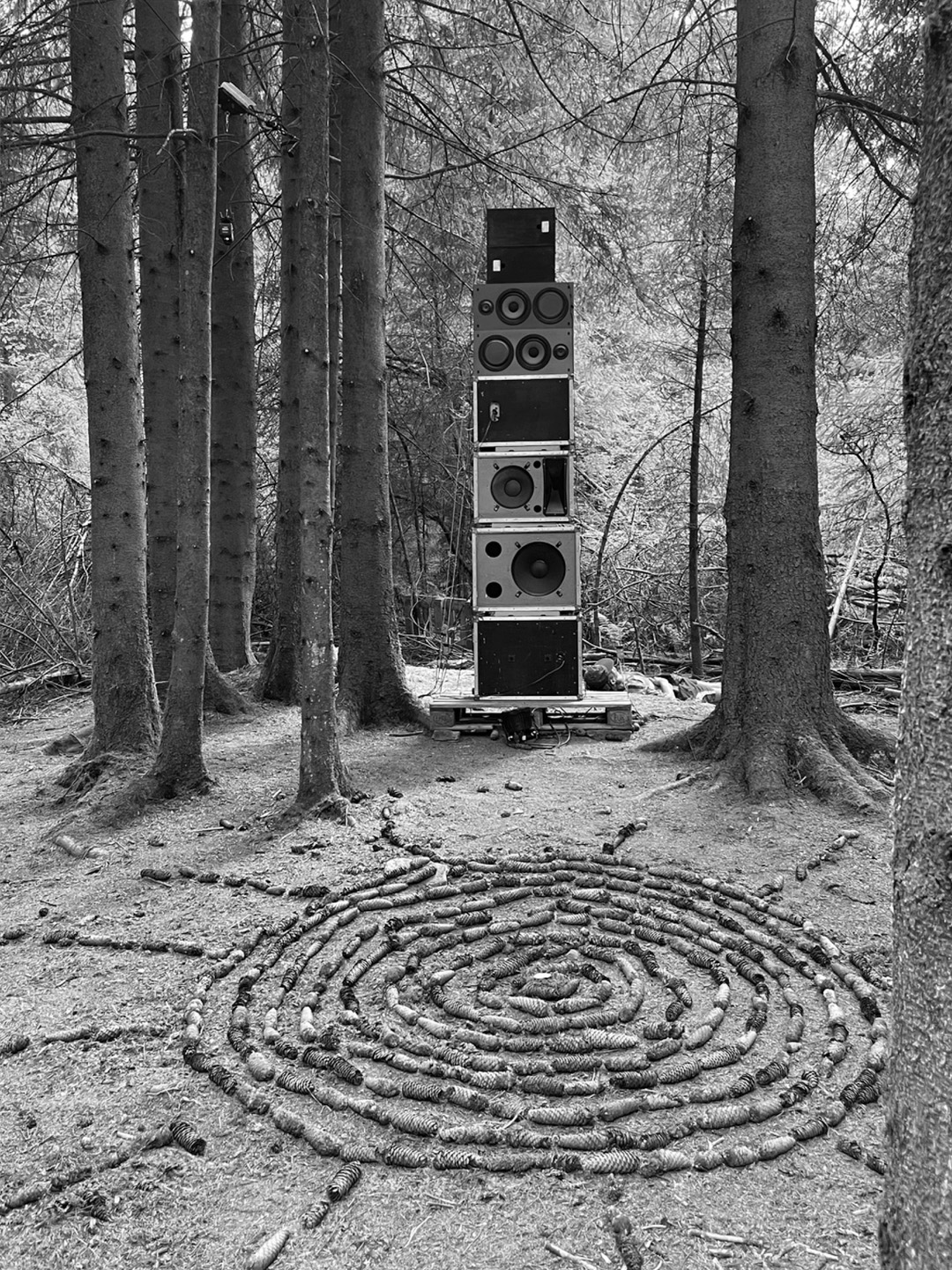
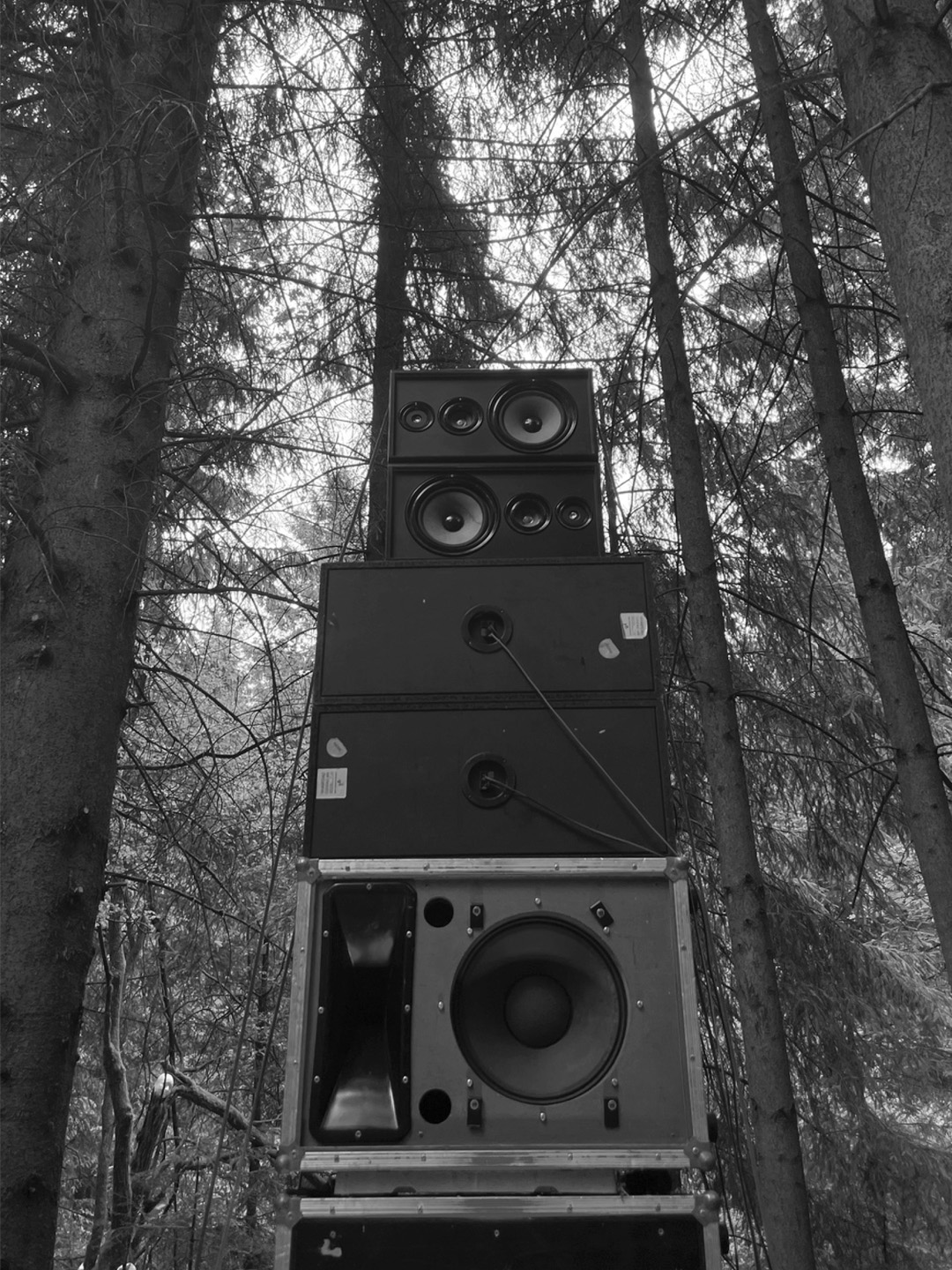
Apart from his improvised live performances for the dancefloor, Abo Abo aka Daniele Carcassi builds soundsystems called Totems, monolithic stacks of speakers that invite listeners to construct their own experience of sound and space. Ahead of his live show at Amphibian x Sinestesie, we spoke about the latter, discussing his path into soundsystems, the physicality of sound, and his different approaches to both practices.
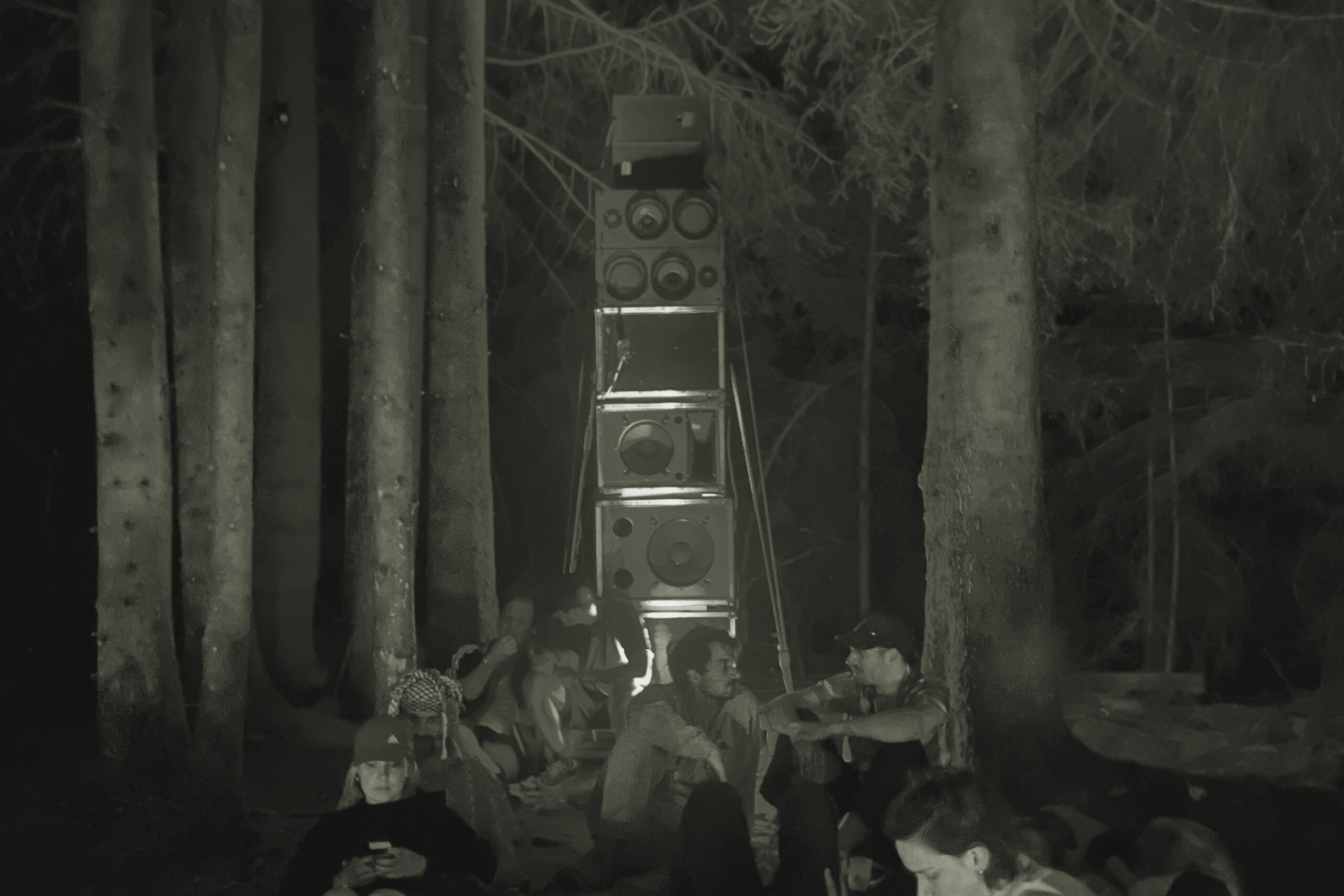
What was your first encounter with a soundsystem like? Was it the physical impact of the sound, the social experience, the technology, or something else that pulled you in?
Abo Abo: It was from the moment I started getting into underground electronic music. I was regularly attending independent parties and events in my area, both in occupied spaces and outdoors, where I would encounter different soundsystems each time.
One of my earliest memories is going to a free party as a teenager, in the countryside near where I grew up. At the time it was known as Pelago Rave, because it took place near the town of Pelago. I went to one of its last editions, and I remember it as one of the first occasions when I really experienced different soundsystems.
What immediately attracted me was the physical and aesthetic impact of the sound. Sound tends to present itself as something abstract, but it isn’t. It is made of physical vibrations that move particles of air, and it is something we can experience with the whole body. Feeling the sound physically, having it hit your body, amplifies and transforms what you hear. It creates a different kind of relationship with music, one that is not only auditory but physical.
At the same time, I was fascinated by the soundsystem itself as a structure. The way different loudspeakers are assembled and rise into space gives them their own identity and character. They are not simply a means of reproducing music; they become part of the experience itself, something that you perceive through different senses.
I think this combination of physical impact, visual presence and the collective experience around it is what really pulled me into the world of soundsystems.
So you are interested in soundsystems as objects in themselves, even when the music is not playing?
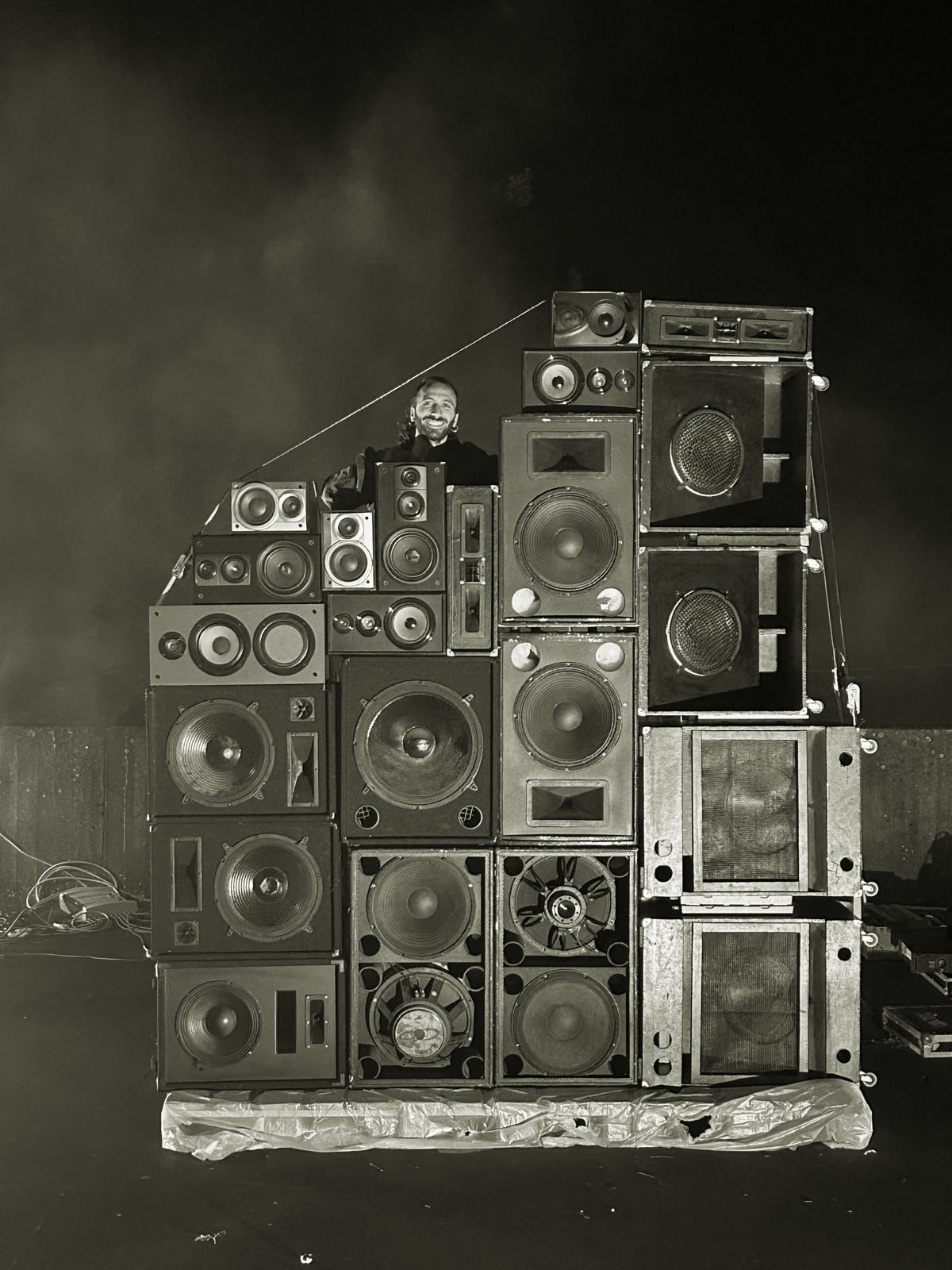
Abo Abo: Definitely. When I started developing my series of installations based on speaker Totems, I became increasingly interested in the physical and aesthetic qualities of the individual speaker, even when it is not playing.
I became fascinated by the idea of combining different speakers and stacking them together to construct a new organism, giving them a sculptural function as well as a sonic one. Some speakers are small, others are large, and they can have very different shapes and proportions. When they are assembled together, they can evoke different images and acquire a presence of their own.
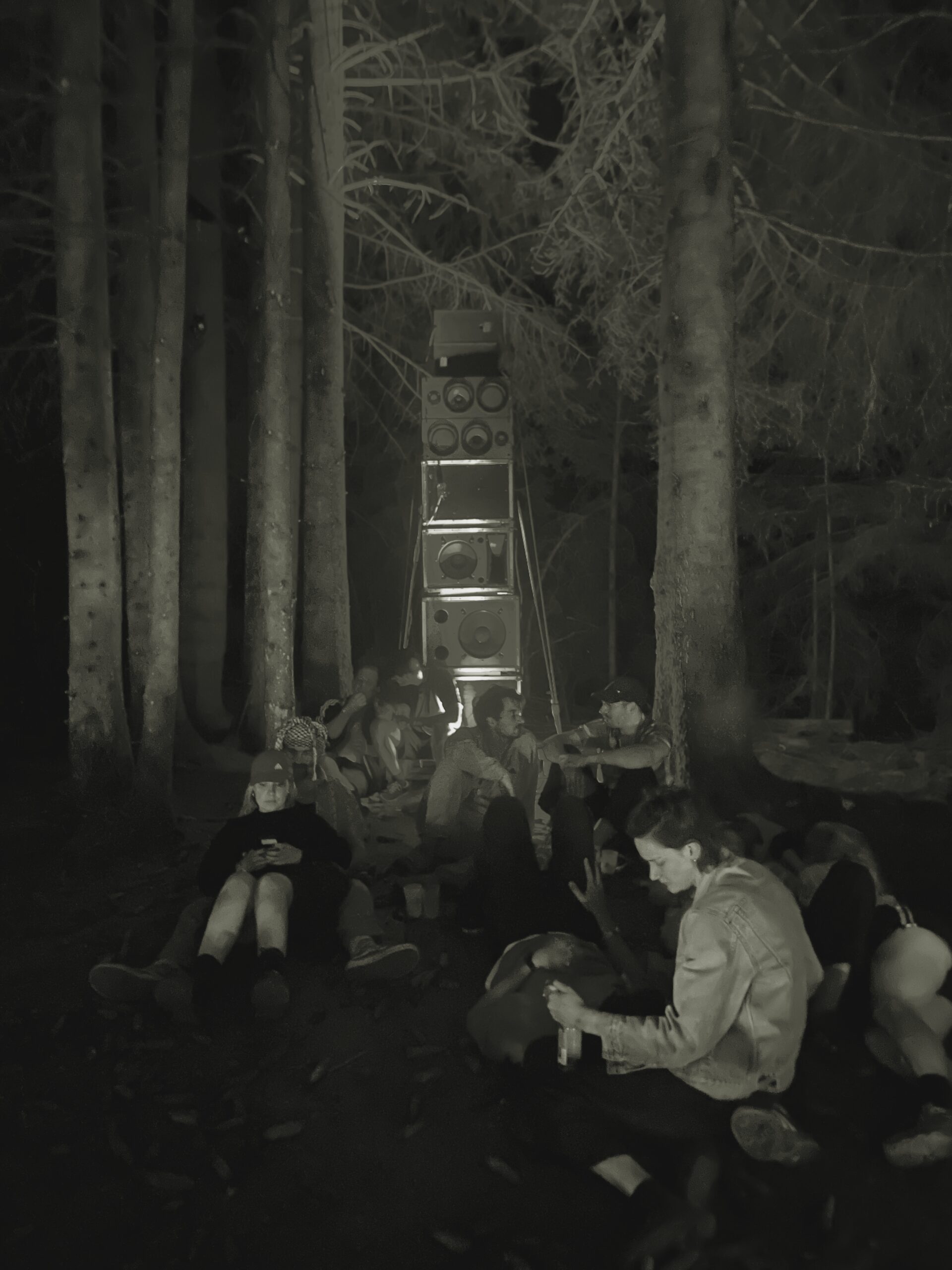
With Totems, you take the sound away from the stage or the dancefloor and place it somewhere people are invited to wander around, or simply lie down. What happens when you remove the performance aspect, when it’s no longer a dancefloor?
Abo Abo: In this case, the music becomes part of a sound installation, and the rules and perception of time change completely compared to music that is performed live or intended for the dancefloor.
Time can expand and slow down, allowing each person to experience space in their own way. People can be invited to move through and explore. Some sonic materials tend to make people stop and listen more carefully; others invite the listener to move, to search for new points of connection with what they are hearing.
It is therefore a different compositional approach. Although the relationship between space, body and music is still central, the purpose is different and much more introspective.
The aim is also to create a new kind of space in which people feel free to listen in whatever way they choose. There is no expectation that they should dance, remain in one place, or pay attention to the music in a specific way. They can simply inhabit the space and decide for themselves how they want to experience it.
Can you tell us what’s different, and what stays the same, in the way you approach composing music for the Totems compared to your live performances?
Abo Abo: When composing music for Totems, I think about how the sound can guide the listener’s attention and movement through the space. I use a more experimental language that comes from my experiences with acousmatic and electroacoustic music.
I conceive the music as one large loop, usually around two hours long, which moves through a series of sonic windows or scenes, each with different qualities. It is a fixed composition, but one that tries to encourage the listener to enter into contact with themselves and with the surrounding environment.
This is also connected to the fact that Totems are multichannel structures. They distribute the sound across three levels and two sides, so what I hear in front of it can be completely different from what I hear behind it, for example. When composing, I therefore build different sonic tableaux that can complement or contrast with one another depending on where the listener is standing. Spatialisation becomes an important compositional element, not simply something added at the end.
The approach is different with my live sets. In that case, a large part of the performance is improvised and composed in real time, responding to the flow of what is happening in the moment. I work with a more coded musical language connected to techno and tribe, which I then reshape through my own sound design and approach to texture.
So while both practices are concerned with the relationship between sound, body and space, they operate in very different ways: one is a fixed composition designed to be explored over time, while the other is a live process that constantly adapts to the situation.
You describe Totems as a fixed composition, but one that can be experienced differently depending on where the listener is standing. What kind of experience do you hope this creates for the listener?
Abo Abo: Yes, I think that is a fundamental aspect of Totems.
I want to give the surrounding environment back to the listener, allowing them to independently decide what to hear, what to look at, where to position themselves, and how long they want to stay.
Totems create a new dimension that can guide the listener without dictating the experience. In the end, the freedom of how to experience the work is placed entirely in the hands of the person experiencing it
There is no single correct listening position, just as there is no fixed direction in which the audience is expected to face. Each position reveals a different combination of sounds, and moving through the space changes the experience.
In this sense, I am interested in challenging the traditional relationship between performer, soundsystem and audience. Rather than organising everyone around a single point of attention, I want to create a situation where the listener can construct their own experience of the sound and the space.
You’re coming to Ankali this Friday with the Sinestesie collective, which seems to share an interest in expanding the idea of what a listening experience can be. What does being part of Sinestesie mean to you?
Abo Abo: For me, Sinestesie is a space that allows us to open up and create new opportunities for expressing ourselves through music and collective action from the ground up.
From its very beginning, when Amanita and I started organising events in Bologna under this name, this was a fundamental idea. We used to organise secret experimental and listening sessions in apartments around the city centre, opening up our homes to friends and creating occasions to come together and listen to new music.
There was something important in reclaiming these intimate spaces and making them open and collective; we wanted to create places for listening and gathering that can sometimes feel like they are missing within the city.
Over time, we have moved beyond these spaces and our events have become more focused on the dance floor. But I think they still carry that original idea: using music to inhabit, transform and reimagine a space, and to create a new experience around it.
For me, being part of Sinestesie means exactly that, creating these opportunities collectively, from the bottom up and allowing the space, the music and the people in it to constantly influence and transform each other.
Abo Abo will perform live at Amphibian x Sinestesie event on September 4.
Presale tickets available here.