Hearts Cutting Through the Noise: A Conversation with Heartnoize
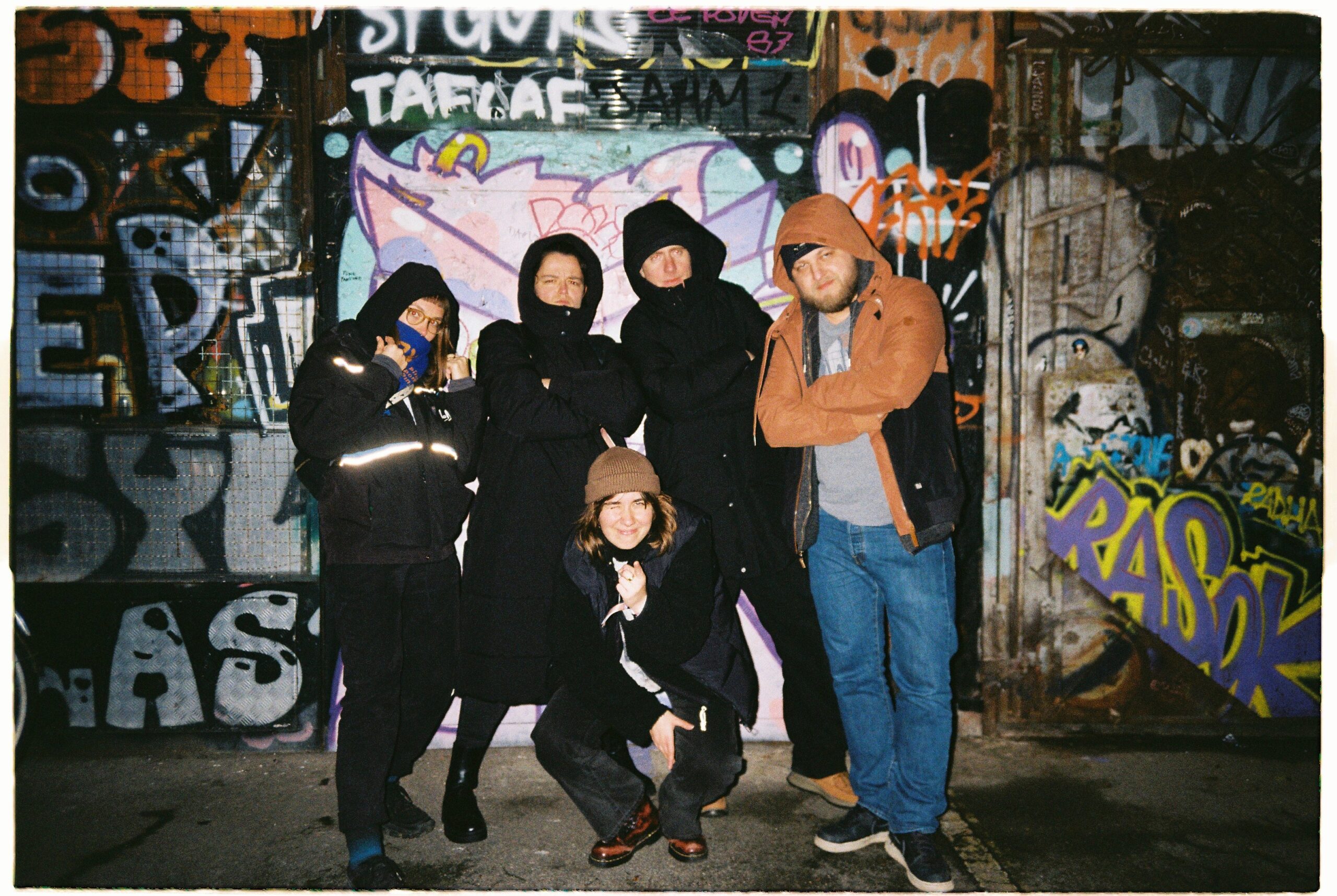
For over a decade, Heartnoize collective’s beat remains restless. From humid Prague basement gigs to glossy European festivals, they have been connecting the dots of exciting and innovative music across all genres for 12 years. Ahead of our joint concert with Los Thuthanaka, Kodiki and expandcollapse at Ankali this week, we spoke with booker David and production head Andrea about showcase festivals, burnout in the music industry, and what it takes to cut through the noise today.

📸 Mária Karláková
Some of you went to the Amsterdam Dance Event last weekend. How was it? Did you network, scout, party, or all at the same time?
David: I survived! The massive scale of the event is quite unprecedented, at least in Europe. The order you mentioned is quite right – networking/meetings were the most essential bit, whereas the most enjoyable one was definitely SPFM showcase in Slim Radio with a couple of Slovak artists playing. I am proud of Paula and Matwe for pulling it off. Definitely not easy to find a room (any room actually) and funding for this kind of event.
The scale of the event is truly astounding – to the point where I sometimes wonder about its very essence. Do you think a small promoter or agency from Central Europe can really grab some attention there?
David: I am not sure. It would have been much easier to get Amsterdam-based music scene people to the event literally any time when ADE is NOT happening. But I did see quite a lot of “random” people pop up. My Amsterdam-based friends call this the ADE effect – so many people are just in the mood to go to any, even small, events. From my experience any sustainable international connection takes likely years to build. One has to start somewhere for sure.
I haven’t been to many showcase festivals, but whenever I have, I always meet Heartnoize there. Which ones would you recommend as a counterbalance to ADE let’s say, and why?
Andrea: I can’t really compare it to ADE since I’ve never been, but the ones that have a strong sense of community for me are MENT in Ljubljana and, of course, Sharpe in Bratislava. You meet many friendly faces there – there’s more space for long and real conversations, and you don’t get overwhelmed so easily.”
David: I believe the line between what’s often called (and sometimes rightfully hated) “showcase festivals” and “regular” festivals is increasingly blurred nowadays. I tend to prefer events that offer more than just a concert programme for people working in music. Doesn’t matter if they call it an off-programme, conference, symposium, industry programme, or simply talks.
Do you book only artists you have seen performing live? Or do you sometimes wing it?
David: Generally, I can see there’s often a huge gap between the live show and the record. I really believe bookers, curators, and promoters shouldn’t base their decisions solely on recordings. I always try to see artists perform live first, but it is tough! There are basically three ways I overcome this. I try to focus more on non-European events so I can gain insight before an artist’s first EU tour; I’m super grateful for any ideas from other Heartnoize members – especially Zuzka, Nora, and Andrea from – bring to the table from the events they visit; and I try to systematically work on building a network of people abroad I can trust, and vice versa. In that way, we can share ideas. Which is the part of my job I actually do enjoy a lot!
You’ve been running events as Heartnoize for 12 years now — first of all, congrats. But have you ever felt burnt out along the way? What would you say is the hardest part of promoting events – both in the short term and over the long run?
Andrea: I’ll let David speak more about the long-term perspective, since he’s been there from the very start. I joined Heartnoize in 2023, but I can totally understand (and already have some experience with) how burnout can happen in this industry. Working in the music scene can be intense: there’s constant multitasking, and you’re always dealing with people and expectations, whether from your audience or your own, haha. At the same time, I still find it incredibly rewarding, and what makes a huge difference is having a team that truly cares and gets along.
David: Burnout is almost a defining state of mind in the music scene, isn’t it? Jokes aside, I think technological advancements are one of the important ways to keep us sane(r). The amount of time we spent shopping riders in supermarkets and now we have Rohlik.cz delivered right to the venue. The amount of time we spent searching for information and now we have Slack. We can sell tickets directly through our phones via SumUp now and with every new customized spreadsheet we make our job easier. And finally, as Andrea said – with every person in the team willing to push through all of this, it gets not necessarily easier, but definitely more manageable and fun.
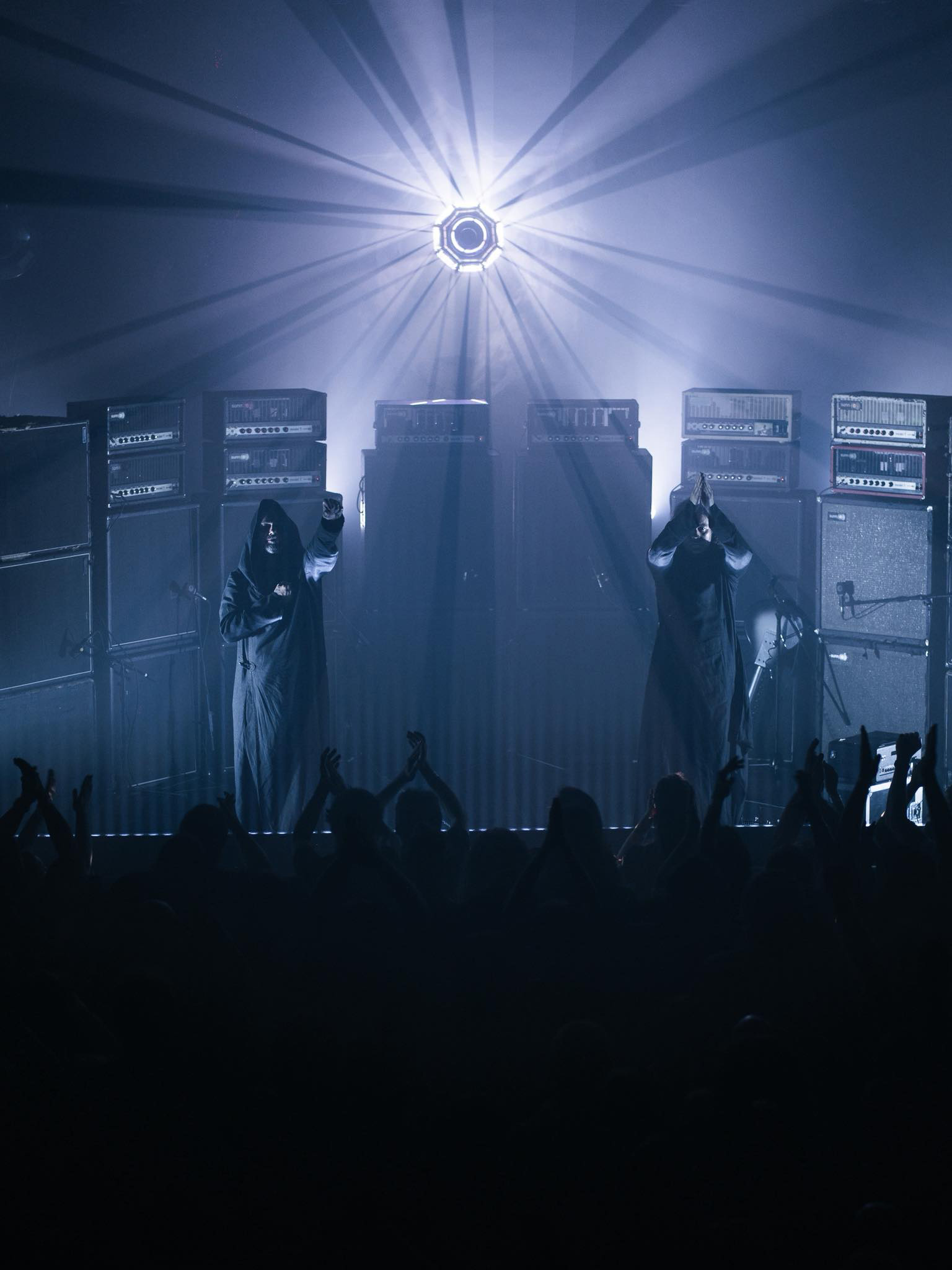
SUNN O))) at Archa+ 📸 Romana Kovacs
Mayssa Jallad at Hotel Olympik 📸 Libor Galia
When you look at the past few years of our local music scenes (CZ & SK), what do you see?
Andrea: A lot of Slovak artists are moving to Prague lately, haha! I guess there’s just more openness and collaboration there. You can really see it around artists like Dušan Vlk, Berlin Manson, and others. My favourite thing this year was definitely the DIY concert scene, it gave me a lot of hope for the future of Slovak music. Even though our government completely wrecked the cultural funding system, it’s inspiring to see the community staying strong and determined to organize events no matter what. Big shout-out to Richard Hronský, who’s been a huge inspiration in this for me!
What about the post-election future of Czechia? Do you expect the new government to attack the independent cultural sector and dismantle the public funding system, similar to what happened in Slovakia over the past two years?
David: In short, I don’t expect it, but I am no expert in Czech politics. What I do know is that the Czech and Slovak music scenes, especially in terms of public funding, have been very different, meaning similar causes might bring very different outcomes. As Heartnoize, we are working on contingency plans for different situations as everyone should really. A truly independent cultural entity should either be independent of any public funding or diversify funding sources so that losing one doesn’t mean the end of its existence.
The main source of income, ticket sales, has been a bit wobblier for a lot of event organizers lately – or at least we hear about it a lot. Are there less people coming to Heartnoize events compared to pre-pandemic times? What’s your take on all the talk about ‘lower attendance’?”
David: First of all, I think we should now really move on from any pre and post-pandemic comparisons. It’s been ages, let’s live in the moment and plan for the future please. People definitely go to shows and a lot of them in Prague are definitely able to pay for the tickets, we can see that. All under one condition: that they really want to experience that particular show. In that sense – what I am more concerned about is the superstar effect present even in very niche scenes meaning artists without access to different forms of capital can find it very hard to compete with artists who are “everywhere”. This concerns your noisy post-punk and cutting-edge experimental electronics just as much as it concerns mainstream pop. The long-tail is endless without almost any barriers to entry, but what does it really mean in terms of sustainability for those who don’t or can’t reach the resources at the front of it?
Andrea: I completely agree with David here. From my side, I don’t believe the audience disappeared, it is just more focused and very selective. So the struggle here is not that people are not going to the shows, but that their attention is pulled in so many directions, and small acts cannot always stand a chance against the names that are constantly visible.
How do you navigate this reality as someone whose job is to bring attention to artists? Be it superstars or obscure acts? How can you “cut through the noise” these days?
Andrea: Managing this is always a mix of different things. We rely heavily on our international network of industry peers to help us spot fresh acts and share honest opinions because it’s almost impossible to do it all alone. Supporting underground and smaller acts is one of our priorities because it helps build engaged niche audiences that can grow organically. We also put a lot of thought into matching artists with venues or specific spaces to create the best possible audience experience and catch attention – this is mostly David’s curatorial work. I think the key to standing out is to build an audience that trusts you, and of course, it takes time and effort to engage with the crowd.
David: I think there is, especially in the boutique/heavily funded EU-scene, a big pressure towards festival shows as a way to present acts, who don’t have the fanbase yet to draw a crowd alone. This is understandable, but sometimes the transition towards headline shows never happens and the artist is completely absorbed (and possibly very happy!) in the festival circuit. Personally, I would argue that many times the audience does not even remember the name of the artists which they saw during some off-peak hours of a multi-day festival, be it an open air or an indoor event. Or they miss their set chatting and smoking outside. With Heartnoize, our focus has always been getting people to come directly for the music with a knowledge of the artist. If “cutting through the noise” means a crowd of fifty highly-focused people in Punctum who then buy some merch, chat with the artist at the bar and will remember the show ever since, then I am happy.
Could you perhaps elaborate why you have matched Los Thuthanaka with Ankali? And which artist/venue combinations, or simply performances you hosted in the past year linger in your memory the most?
David: I listened to their self-titled record shortly after it got released and it felt darker, noisier than the previous DJ E’s material. A show in Ankali came to my mind quite naturally, it just clicked. But I do need to mention a more pragmatic aspect. Our ministry of culture is sadly quite sceptical towards coproductions lately, which I find alarming. Collaborations of platforms sharing visions is essential to culture, we definitely shouldn’t nurture a completely individualistic approach. Our partnership Heartnoize x Ankali here makes the show possible financially and gives a chance for the local audience to see an unique project in an intimate setting for a very affordable ticket price. After all, it is the only non-festival show of Los Thuthanaka except a show in Berlin, where the tickets cost double. And it’s their only show in Central and Eastern Europe yet. I go to the lengths here, because I really want to stress that shows like these are far from organic or spontaneous endeavours and should not be taken for granted.
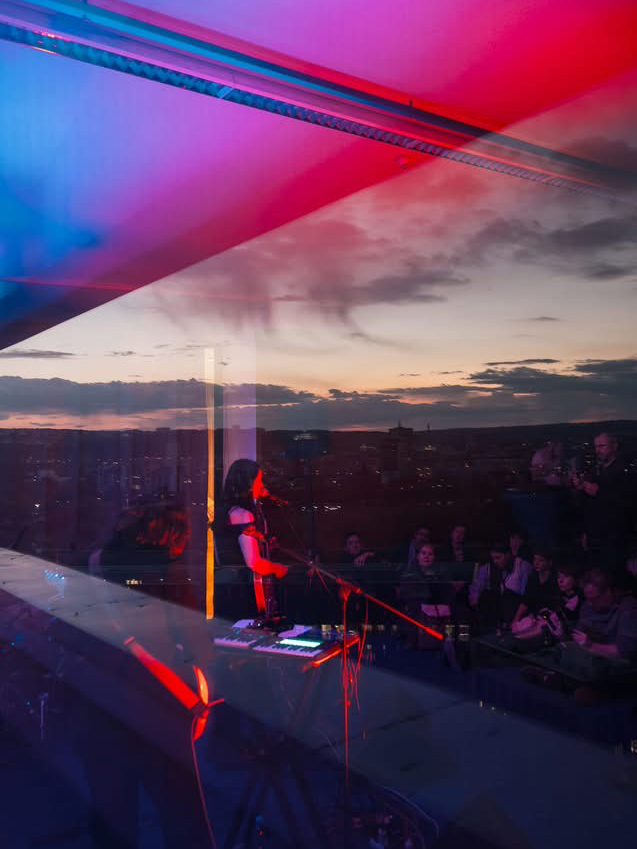
Last year we presented Mayssa Jallad singing about snipers being thrown out of the windows of the top floors of Beirut’s hotels during one part of the Lebanese civil war. The show happened on the last floor of Hotel Olympik in Prague and I am sure the mental pictures the crowd was projecting were quite vivid.
Andrea: My personal favorite was Claire Rousay at Vila Štvanice. It was a very intimate show where she recreated a cozy bedroom setting, traveling with two enormous bags to bring an inflatable mattress and fake walls with her. She moved between the bed and the microphone stand, and at one point walked through the crowd to record samples of the audience’s responses to her questions, which she then used live.
Heartnoize x Ankali Live with Los Thuthanaka, Kodiki and expandcollapse takes place on Wednesday, November 5.